Table of Contents
A cheque used to be a high-stakes financial move in the UAE. In the past, a bounced cheque resulted in immediate police involvement and jail time. Laws have, however, changed dramatically in recent years. As a result of recent amendments to the Commercial Transactions Law, bounced cheques have been decriminalized. This allows creditors to recover their debts more quickly.
Whether you are a business owner paying suppliers or a tenant handing over rent cheques, you must understand the current guidelines for UAE cheque signing laws. This guide breaks down exactly how the system works, from writing the cheque to enforcing payment through the courts.
Guidelines for UAE Cheque Signing Laws: Key Points
Before handing over a cheque, you need to get the basics right. A cheque is a legal order to pay, and technical errors can render it invalid. Through this guidelines for UAE cheque signing laws you will know how to proceed with it.
Here’s how to write a cheque in the UAE
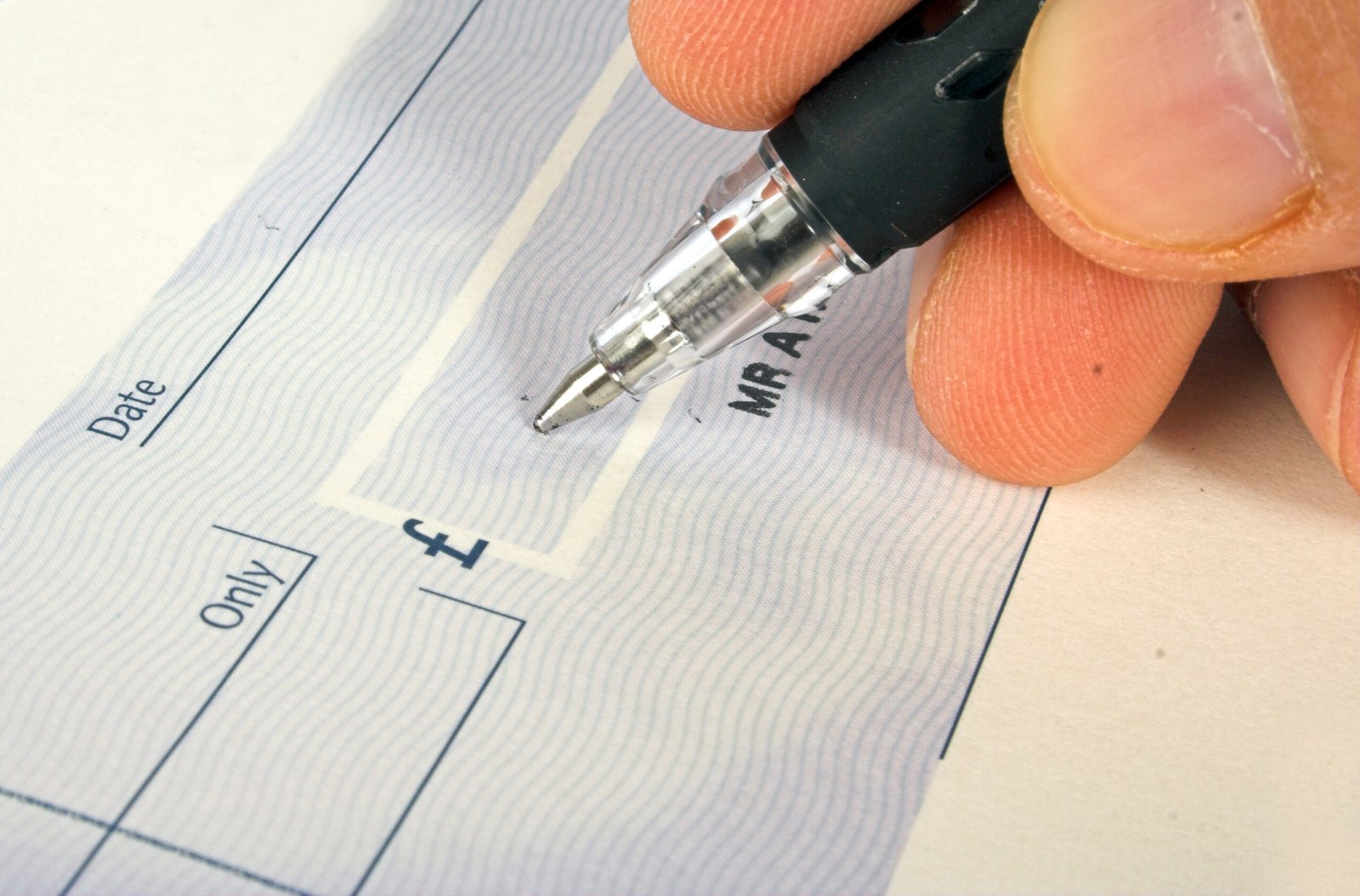
If you want to ensure your cheque clears without issues, follow these guidelines for UAE cheque signing laws steps:
- Date: Write the date clearly. In the UAE, the date written is the date the cheque becomes payable.
- Payee Name: Write the exact name of the person or company receiving funds.
- Amount: Write the figure in the box and the amount in words on the line. If these two differ, the bank generally honors the amount written in words, though it often leads to rejection for clarity reasons.
- Signature: This is the most critical part. Your signature must match the specimen held by the bank exactly.
Validity of Signed Cheque in UAE
A cheque is a tool for payment, not a tool for credit. Under the law, a cheque is valid for payment immediately upon the date written on it.
- Presentation Period: The legal deadline for presenting a cheque for payment is 6 months from the date of issuance.
- Stale Cheques: If a beneficiary presents the cheque after 6 months, the bank may refuse to cash it. However, the debt is not cancelled; the beneficiary can still claim the money through civil court, provided they file within the legal time limits.
The “New” Cheque Bounce Law in UAE 2025
There is often confusion regarding the “new cheque bounce law in uae 2025.” To clarify, the major legislative shift occurred with Federal Decree-Law No. 50 of 2022 (The Commercial Transactions Law), and these rules are the current standard applied in 2025.
Decriminalization of Insufficient Funds
The most significant change is that bouncing a cheque due to insufficient funds is no longer a criminal offence in most cases. You cannot file a police case solely because a cheque returned unpaid for lack of money. Instead, the law now treats the cheque as an “Executive Instrument.”
What is a Cheque Execution Case in UAE?
Since you can no longer file a police report for simple insufficient funds, the law gave creditors a faster civil route: the Cheque Execution Case.
Because a cheque is now seen as an executive instrument (a document that proves debt on its own), a creditor does not need to file a full civil lawsuit and wait years for a judgment. They can go directly to the execution judge to demand payment. This process is faster, cheaper, and forces the debtor to pay or face asset seizure.
Legal Framework on Cheque Issuance and Forgery

While the law is lenient on “insufficient funds,” it is incredibly strict on fraud and bad faith. In this guidelines for UAE cheque signing laws you will fine how this impact for forgery and badfaith.
Criminal Penalties for Forgery and Bad Faith
The law still imposes severe criminal penalties, including imprisonment and fines, for specific actions deemed as acting in bad faith. Here in these guidelines for UAE cheque signing laws you can still face criminal charges if you:
- Order the bank not to pay: If you tell the bank to stop the cheque without a valid legal reason (like theft or bankruptcy).
- Close the account: Closing your account before the cheque is cashed to prevent payment.
- Withdraw available funds: Deliberately draining the account so the cheque bounces.
- Deliberately write it incorrectly: Intentionally signing the wrong signature so the bank rejects it.
Forging or Counterfeiting a Cheque
What is the penalty for forging or counterfeiting a cheque? This remains a serious crime. These guidelines for UAE cheque signing laws explain anyone forges a cheque or knowingly uses a forged cheque faces imprisonment of no less than one year and substantial fines (often between AED 20,000 and AED 100,000).
Partial Payment of a Cheque
One of the most practical updates to the guidelines for UAE cheque signing laws is the mandatory acceptance of partial payment.
What is “Partial Payment of a Cheque”?
If a drawer (the person paying) has AED 50,000 in their account, but writes a cheque for AED 100,000, the cheque would traditionally bounce completely. Now, the bank is legally required to pay the AED 50,000 to the beneficiary if the beneficiary agrees.
What is the Mechanism for Partial Payment?
Here is the guidelines for UAE cheque signing lawsyou will know mechanism for partial payment;
- Presentation: The beneficiary presents the cheque.
- Shortfall: The bank identifies there are insufficient funds to cover the full amount.
- Payment: The bank offers the available balance to the beneficiary.
- Endorsement: The bank marks the cheque as “partially paid.”
- Certificate: The bank issues a Partial Payment Certificate to the beneficiary.
Benefit of Obtaining a Partial Payment Certificate
This certificate is crucial. It serves as legal proof that a portion of the debt is paid and the rest is outstanding. The beneficiary can then take this certificate and the original cheque to the execution court to claim the remaining balance.
Is Partial Payment Mandatory?
Yes, legally, the bank is obliged to offer it. However, the beneficiary (the person cashing it) has the right to refuse partial payment and reject the transaction entirely if they prefer to pursue the full amount legally.
Bank’s Role and Liability

Banks play a central role in enforcing these guidelines for UAE cheque signing laws.
Reporting to the AECB
What is the mechanism for reporting returned or partially paid cheques to AECB? When a cheque bounces or is only partially paid, the bank reports this incident to the Al Etihad Credit Bureau (AECB).
- Impact: This negatively affects the issuer’s credit score (Credit Report), making it difficult for them to get loans, credit cards, or mortgages in the future.
Bank Liability for “Bad Faith” Rejection
If a bank has sufficient funds in the account but refuses to pay a valid cheque without a court order or valid reason, the bank itself can face penalties.
Civil Remedies for Victims

These guidelines for UAE cheque signing laws explain if you hold a bounced cheque, your path to recovery is now streamlined.
Steps to Take Legal Action
- Obtain the Bank Memo: Get the official paper from the bank stating the cheque returned due to insufficient funds (or the Partial Payment Certificate).
- File an Execution Case: Submit the cheque directly to the execution court.
- Enforcement: The judge issues an order against the debtor to pay. If they fail to pay, the judge can order the freezing of bank accounts, seizure of assets (cars, property), and travel bans.
Timelines for Filing
- Civil Case: You generally have 2 years from the expiration of the presentation period to file a civil claim against the drawer.
- Against the Bank: If the bank is at fault, you have 3 years to file a claim against them.
Frequently Asked Questions (FAQs)
Can we deposit cheque before date in UAE?
Legally, a cheque is payable on sight. However, under Article 648 of the Commercial Transactions Law, a cheque should not be presented for payment before the date indicated as the date of issuance. Banks in the UAE will typically not process a post-dated cheque until the date written on the cheque arrives.
Cash cheque withdrawal in UAE requirements?
To withdraw cash using a cheque in the UAE (an “open” or “cash” cheque), you must visit the branch of the bank where the issuer holds the account. You will need:
The original cheque.
Your valid Emirates ID (or passport with visa).
To sign the back of the cheque (endorsement) in front of the teller.
Can I withdraw cash without cheque?
If you are the account holder, yes, you can withdraw cash using an ATM card or a withdrawal slip at the branch with your Emirates ID. If you are a third party trying to get money from someone else’s account, you absolutely need a cheque or a verified digital transfer; you cannot withdraw cash without it.
What is Article 401 of the UAE Penal Code?
Article 401 was the famous section of the old Penal Code that criminalized bounced cheques. It has been repealed. The decriminalization of cheques took effect in January 2022. The penalties for cheque crimes are now governed by the Commercial Transactions Law (Decree-Law No. 50 of 2022) and specific sections of the new Crimes and Penalties Law regarding forgery.
What are the new rules for cheques?
The “new” rules refer to the 2022 amendments (still applicable) which:
Decriminalized bouncing checks due to insufficient funds.
Made partial payment mandatory for banks.
Allowed cheques to be enforced directly through execution courts.
Retained criminal penalties only for fraud and bad faith (e.g., closing the account).
What is the validity of signed cheque in UAE?
A signed cheque is valid for presentation to the bank for 6 months from the date of issue. After 6 months, the bank will classify it as “stale” and refuse to pay, but the cheque remains valid evidence of debt for civil claims for a longer period (generally 2 years).
Can a company refuse to accept a cheque?
Yes. A cheque is a method of payment, but private companies are not legally obligated to accept them if they prefer cash, credit card, or bank transfer.
How do cheques work in the UAE?
Cheques act as immediate cash payment instruments. Once signed and handed over, they represent a binding promise to pay. Post-dated cheques are often used in the UAE for rent (e.g., submitting 4 cheques for the year ahead), where the landlord deposits them on the future dates written on the cheque.
Is cheque bounce a criminal offence in the UAE?
Not anymore for simple “insufficient funds.” It is only a criminal offense if the bounce results from “bad faith” actions, such as deliberately closing the account, withdrawing all funds to prevent payment, or falsifying the signature.
What happens after 7 years of not paying debt in the UAE?
There is a common myth that debt disappears after 7 years. In reality, while civil claims have statutes of limitation (often 15 years for general civil rights, or shorter for commercial papers), the debt does not simply vanish. Banks can pursue claims for long periods, and if a judgment was already issued against you, that judgment is enforceable for many years.
What is the objective of the Central Bank of the UAE?
The Central Bank regulates the financial system. Regarding cheques, their objective is to maintain trust in the financial system, reduce the backlog of criminal cases related to cheques, and modernize the economy by shifting focus from criminal punishment to efficient financial recovery.
How to cash a cheque in Dubai?
To cash a cheque in Dubai:
Check the date (it must be today’s date or earlier, but not older than 6 months).
Go to the specific bank branch of the issuer (e.g., if it’s an Emirates NBD cheque, go to an Emirates NBD branch).
Present your original Emirates ID.
Sign the back of the cheque.
Collect the cash.
How long is a cheque valid in UAE?
For banking purposes (cashing/clearing): 6 months.
For legal purposes (filing a case against the drawer): 2 years from the end of the presentation period.

Professional blog writer and researcher based in Dubai, covering UAE real estate, business trends, and legal insights. I focus on accurate, practical, and reader-friendly content.